
International Physicians
for the Prevention of Nuclear War

Nuclear Weapons Abolition

In light of the existential threat they pose, the complete, irreversible elimination of nuclear weapons is the only way to safeguard humans and the planet. We advocate for abolition through the United Nations Treaty on the Prohibition of Nuclear Weapons (TPNW). 

We’ve made it [this far] having tempted fate with tens of thousands of the most destructive devices ever created, escaping within a whisker of global catastrophe more times than bears thinking about
Dr. Sue Wareham
Former IPPNW Board Member

Founded in 1980 during the cold war by a group of Soviet and American doctors, IPPNW sounded a medical warning to humanity: that nuclear war would be the final epidemic; that there would be no cure and no meaningful medical response.

Throughout the 1980s and the 1990s, IPPNW comprehensively documented the health and environmental effects of the production, testing, and use of nuclear weapons. Physician activists were instrumental in the campaigns to ban atmospheric and underground nuclear test explosions and in helping to shut down nuclear weapons testing sites and production facilities.

But as long as nuclear weapons exist in this world, the risk to humanity is too great.

The International Campaign to Abolish Nuclear Weapons (ICAN) was launched by IPPNW in 2007 and received the Nobel Peace Prize in 2017, after campaigning successfully for the Treaty on the Prohibition of Nuclear Weapons (TPNW), adopted at the United Nations in July of that year. The TPNW fulfills the long-standing disarmament obligation in Article VI of the Nuclear Non-Proliferation Treaty (NPT), which has long been ignored by the P-5 and their allies. With the support from over half the world’s nations, three successful Meetings of States Parties, and a Review Conference coming up in 2026, the TPNW is the only multilateral disarmament fora delivering tangible progress toward the elimination of nuclear weapons.

Each of us has a role to play in bringing the TPNW’s goal of a nuclear weapons free future to fruition.

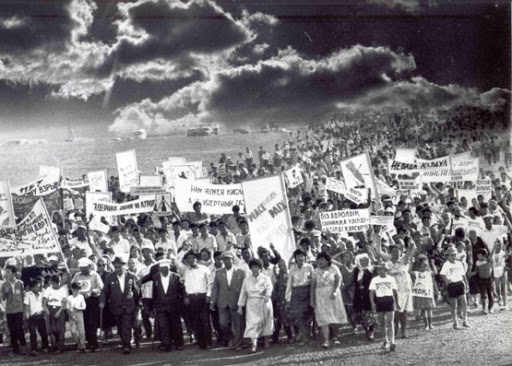
In the early 1990s, IPPNW joined with the “Nevada-Semipalatinsk movement” to protest continued nuclear testing, leading to the closure of the Soviet test grounds and to ending nuclear testing in both the US and the former Soviet Union.

Treaty on the Prohibition of Nuclear Weapons

The Treaty on the Prohibition of Nuclear Weapons was opened for signature in 2017 and entered into force in 2021. Read the full text of the treaty here. Explore IPPNWs ongoing work in the campaign to negotiate and universalize the nuclear ban treaty.

The Third Meeting of States Parties to the TPNW took place in New York, March of 2025.  More than 50 IPPNW leaders from around the world attended the conference, as part of more than 1,000 civil society representatives and almost half the world’s nations.  IPPNW delegates were active across every aspect of the 3MSP, securing meetings with diplomats, collaborating with civil society, and ensuring the message of humanitarian disarmament was heard within UNHQ and beyond.  

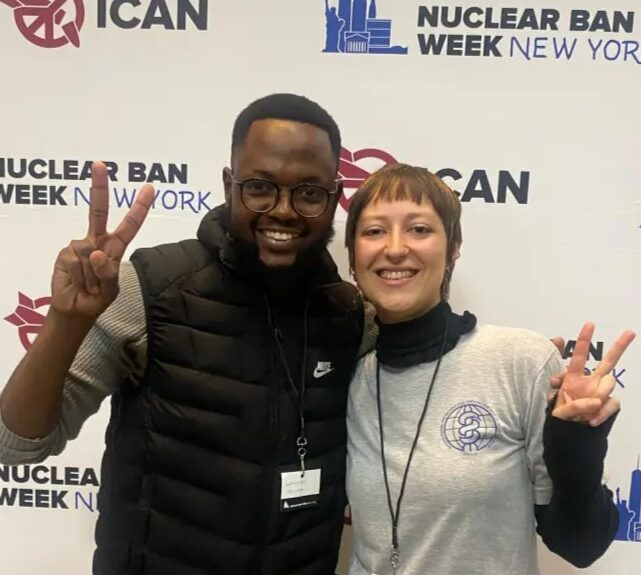
IPPNW student leaders Stella Ziegler and Walusungu Mtonga delivered IPPNW’s official statement to the assembly. Julianne Hauschulz of IPPNW Germany delivered remarks with Jean-Marie Collin of ICAN France condemning nuclear deterrence policies and the normalization of nuclear threats. 

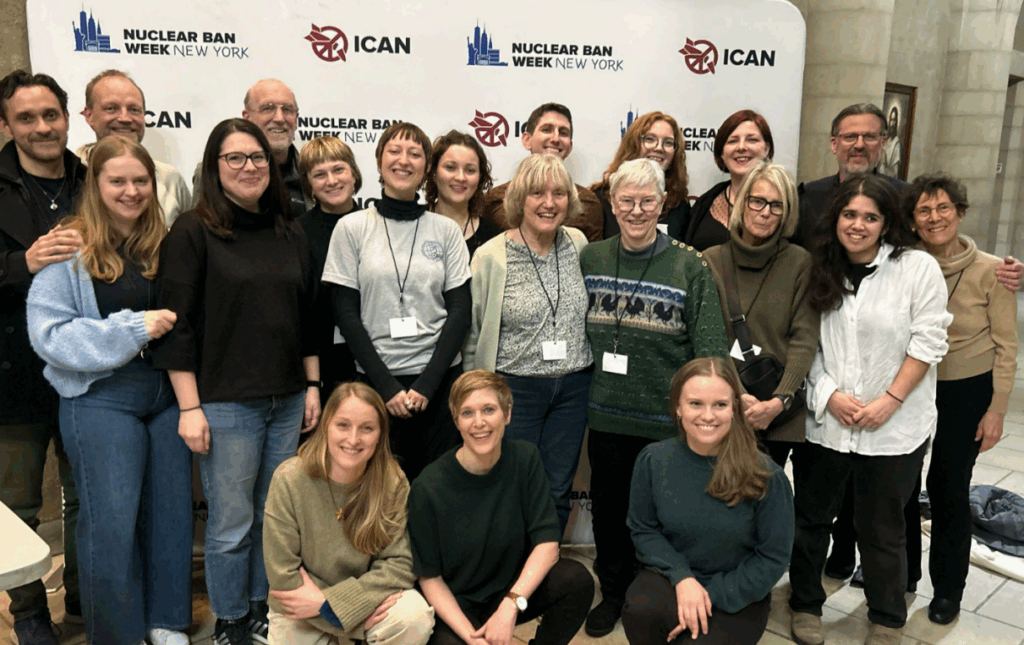
Members of IPPNW’s delegation to the 3MSP at the ICAN Campaigners Forum in New York
We reject the future that such weapons promise for our patients, families, and communities. It is a future that we must not allow to unfold. The threat of nuclear war is a very present danger, exacerbated by the growing challenges we face, including the erosion of the rule of law, the escalating climate crisis, and the integration of artificial intelligence into nuclear command and control systems.
Stella Ziegler and Walusungu Mtonga
IPPNW International Student Representatives
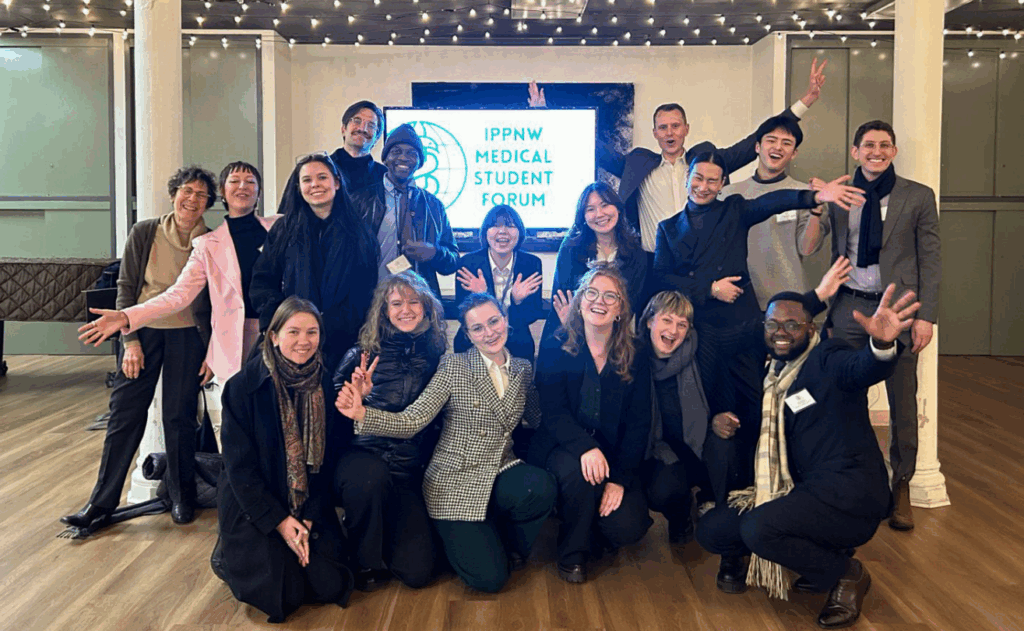
IPPNW Medical Student Forum at the 3MSP

On the civil society side, IPPNW once again played a leading collaborative role in the Youth for TPNW conference, the largest youth-focused event of the week.  IPPNW students also hosted a medical student forum on the humanitarian impacts of nuclear weapons and the concrete steps that can be taken nationally.  IPPNW continued to advocate for evidence based policy making with an official side event featuring Parliamentarians for the TPNW, and the World Health Organization.  This event marked the first time the WHO participated in a TPNW meeting.

You can find other reflections from IPPNW at the 3MSP in Vital Signs (May 2025) and via PeaceandHealthblog.com.

Read the official declaration of the 3rd Meeting of States Parties “Strengthening our commitment to a world free of nuclear weapons amidst the rising global instability.” and the package of decisions for carrying forward the Treaty here.

The Second Meeting of States Parties to the TPNW took place in New York during November, 2023.
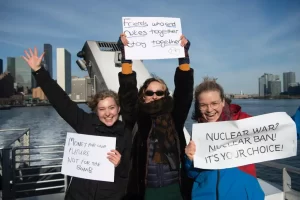
IPPNW Germany Student Representatives — Sarah Kuiter, Stella Ziegler, and Lea Dittmar — gather before 2MSP. Photo credit: Darren Ornitz | ICAN

An IPPNW delegation of over 50 doctors, medical students, and activists attended to the 2MSP to reinforce the urgent need to prevent nuclear war by abolishing nuclear weapons, the largest NGO delegation to attend the meeting.   IPPNW delegates participated in the general debate, met with government representatives, and raised the voices of health professionals at dozens of civil society and diplomatic events.

IPPNW Program director Molly McGinty moderated the ICAN Campaigners Forum ahead of the 2MSP, attended by around 200 activists to strategize and organize around a nuclear ban.  IPPNW was also a lead collaborator of the Youth for TPNW conference.  Board member Dr. Sally Ndung’u delivered powerful testimony to the plenary.  IPPNW’s side event engagements focused on the humanitarian impacts of nuclear weapons, engaging with international health agencies, and increasing evidence based policy-making.
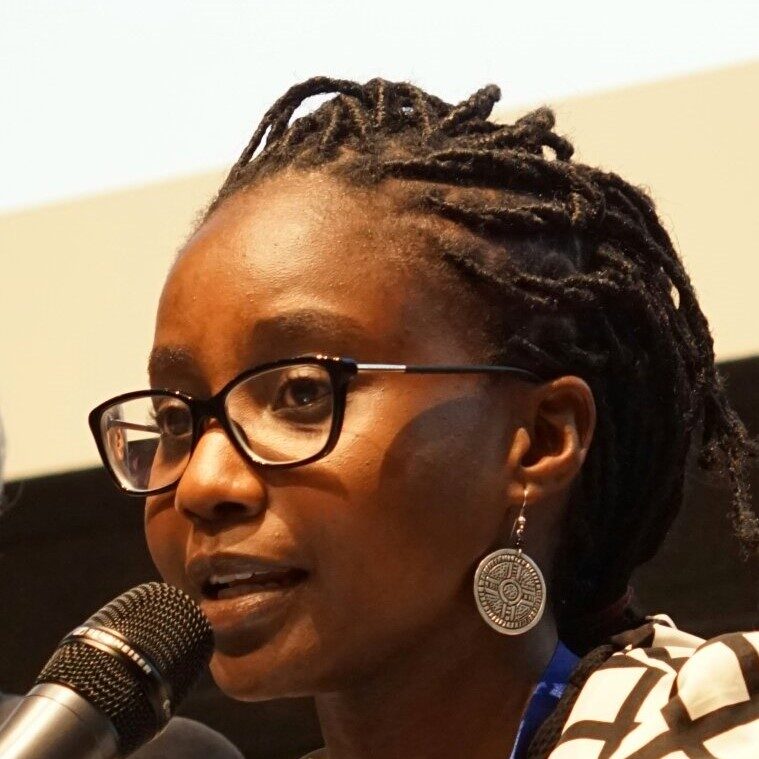
This second Meeting of States Parties to the TPNW occurs at a moment of extraordinary danger where the world is sleepwalking towards a nuclear catastrophe of unimaginable magnitude. It is time to wake up, before our nightmare becomes reality.
Dr. Sally Ndung’u
IPPNW Board Member

You can find other reflections from IPPNW at the 2MSP in Vital Signs (March 2023) and via PeaceandHealthblog.com.

Read the official declaration of the 2nd Meeting of States Parties “Our commitment to upholding the prohibition of nuclear weapons and averting their catastrophic consequences.” and the decisions for carrying forward the Treaty here.

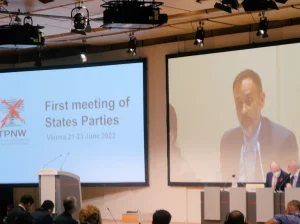
The first meeting of states parties to the Treaty on the Prohibition of Nuclear Weapons took place in June, 2022, in Vienna.

Ahead of the conference, IPPNW offered initial recommendations to the Treaty meeting based on professional humanitarian expertise and promoting health for all the world’s people. You can find those recommendations here

The IPPNW Co-President Carlos Umaña delivered an intervention to the meeting calling for the establishment of a Scientific Advisory Council to support and guide the work of the TPNW.  The IPPNW medical student movement also collaborated on a youth statement calling for inclusive and collaborative work with civil society to make the Treaty work most impactful.

Following the MSP1, the States Parties to the TPNW adopted the Vienna Action Plan detailing the goals and actions of the treaty meetings.  This declaration acts as the guidelines for implementing and universalizing the treaty business.

You can read the Vienna Action Plan in the report from the 1MSP, Annex II.

The Vienna Action Plan contains guidelines for the establishment of an intercessional structure which included the formation of a Scientific Advisory Group, as endorsed by the IPPNW.  IPPNW Board Member Dr. Jans Fromow was appointed to serve on the Scientific Advisory Group to the Treaty until the first review conference for the TPNW which will occur in 2026.  The Action Plan also explicitly outlines an inclusive and progressive collaboration with civil society and affected communities.

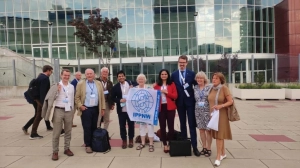
IPPNW delegation to the 1MSP
IPPNW Co-President Carlos Umaña delivering a statement to the 1MSP
These warnings about the humanitarian impact of nuclear weapons are the most compelling reason for eliminating nuclear weapons and the most powerful argument we have for the need to universalize the TPNW.
Carlos Umaña
IPPNW Co- President

From March 2013 to December 2014, ICAN served as the civil society coordinator for each of three major conferences focusing on the humanitarian impacts of nuclear weapons and nuclear war in Norway, Mexico, and Vienna.  The conferences brought together most of the world’s governments, along with international organizations and academic institutions. IPPNW participated actively in all three conferences, providing much of the medical and scientific evidence about the consequences of nuclear weapons and nuclear war on which subsequent political and diplomatic action was based.

In December 2015, the UNGA voted to establish a working group to develop a legal means to achieve a world without nuclear weapons.  Following the recommendations from the working group, the General Assembly voted to negotiate the ban treaty in 2017, a vote which passed with 123 nations in favor.

Following intense negotiations over a series of weeks, the UN adopted the Treaty on the Prohibition of Nuclear Weapons and opened it for signature on September 20th, 2017.

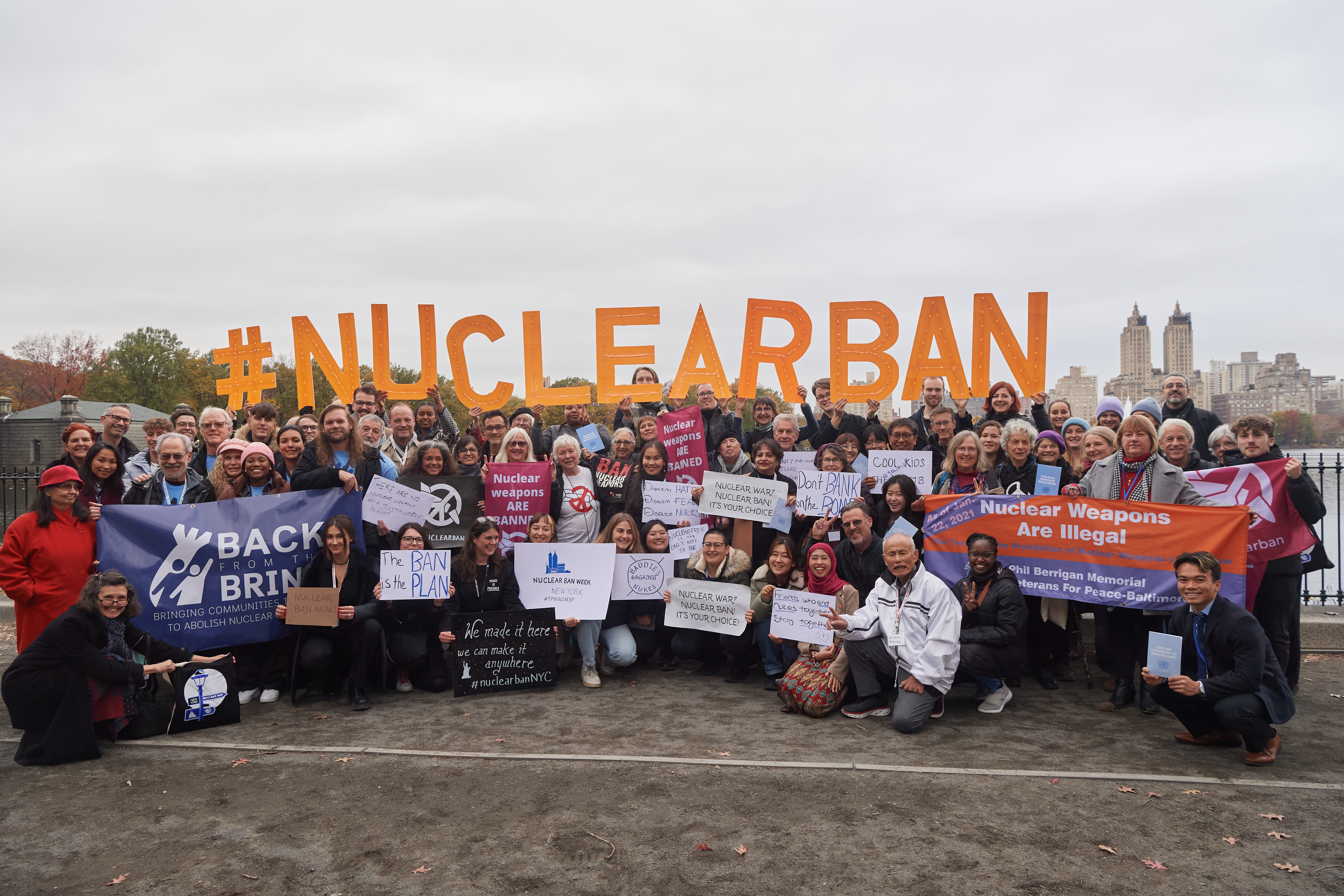
On January 22nd, 2021, the TPNW entered into force after the 50th state party ratified it, making Nuclear Weapons Illegal under international law.  

IPPNW has advocated for the TPNW at every step, encouraging states to join the landmark Treaty for humanitarian disarmament.
IPPNW's Calls to Decision Makers

All UN Member States, particularly the Nuclear 9 (N-9)— China, France, India, Israel, North Korea, Pakistan, Russia, the United Kingdom, and the United States — to adhere to their disarmament obligations and join the UN Treaty on the Prohibition of Nuclear Weapons at the earliest possible date.

For more information about IPPNW’s nuclear abolition programs, contact Molly McGinty

Nuclear Abolition News