
Nuclear flashpoints are places where the risk of escalation to nuclear conflict or nuclear war is extremely high. The war in Ukraine, the ongoing conflict between India and Pakistan, and the wars in the Middle East all involve nuclear powers and are cause for great concern.
The risk of nuclear disaster is higher today than ever before, with the Bulletin of Atomic Scientists moving their annual Doomsday to 85 seconds to midnight, the closest it has ever been in history. In 2025 alone, 5 of the 9 nuclear armed states engaged in armed conflict. Nuclear threats are being normalized and diplomacy is being eroded. IPPNW rejects this trend and calls for a return to negotiations and peace building measures.
Below are just a few IPPNW responses to the threat. Last updated 11 June, 2026.
The war in Ukraine is causing death, destruction, and a wave of desperate refugees. The danger greater because of Ukraine’s 15 nuclear power reactors under threat in a war zone.
India- Pakistan
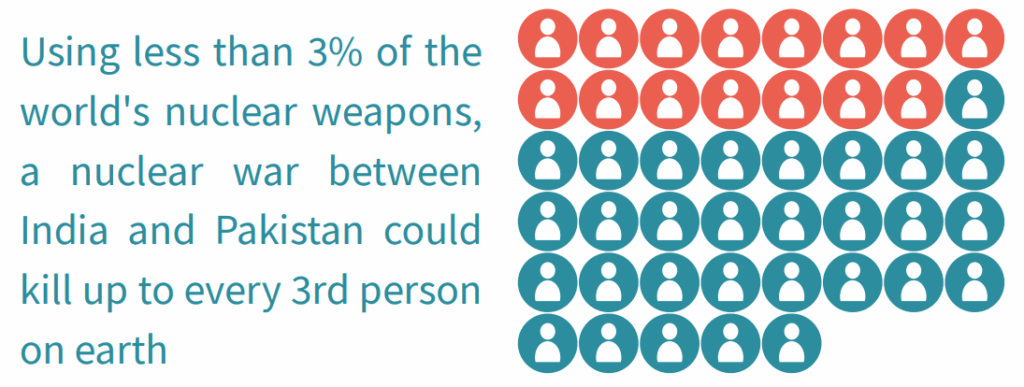
The ongoing conflict between two nuclear armed states in South Asia marks a very serious nuclear flashpoint. The most recent escalation in May of 2025 makes this a very dangerous situation.
Middle East Wars
The only nuclear armed nation in the Middle East, Israel, has been conducting aggressive military attacks throughout the region. The nuclear-armed United States’ acts of military aggression and threats against Iran are destabilizing and dangerous.
PSR, IPPNW, and PHR Call for an End to All Fighting in Iran (April 2026)
IPPNW Condemns Strikes Against Iran, Calls for Return to Negotiations (Feb 2026)
IPPNW Calls for an Immediate Ceasefire and Return to Diplomacy with Iran (June 2025)
IPPNW Statement on Israel’s Attacks on Gaza’s Healthcare System and Personnel (June 2025)
IPPNW calls for immediate humanitarian ceasefire in Israel-Palestine War (Nov 2023)
Threats of proliferation
Threats to nonproliferation, more countries acquiring nuclear weapons, create a dangerous narrative around nuclear weapons and undermine existing nonproliferation and disarmament frameworks such as the Nuclear Non-Proliferation Treaty (NPT). Additionally, seven of the nine nuclear weapons states are practicing vertical proliferation – meaning the modernization and increased stockpiling of nuclear weapons- further undermining disarmament and arms control frameworks.
As fears rise in Europe over a potential U.S. withdrawal of nuclear weapons, debates around proliferation among European countries, or the possible creation of a “Eurobomb” under France’s nuclear umbrella, are increasingly concerning. Similarly, the proposed AUKUS expansion of nuclear-powered submarines in Australia threatens to weaken the global nuclear taboo and open new pathways for proliferation.
Eurobombs would make the world a much more unstable and dangerous place (April 2025)
Proposed US/UK nuclear-powered submarines for Australia: Jeopardising health and fueling an arms race (Sept 2021)