Nuclear Famine: climate effects of regional nuclear war

***UPDATED SECOND EDITION OF "NUCLEAR FAMINE"***
Nuclear Famine: Two Billion People at Risk? [PDF]
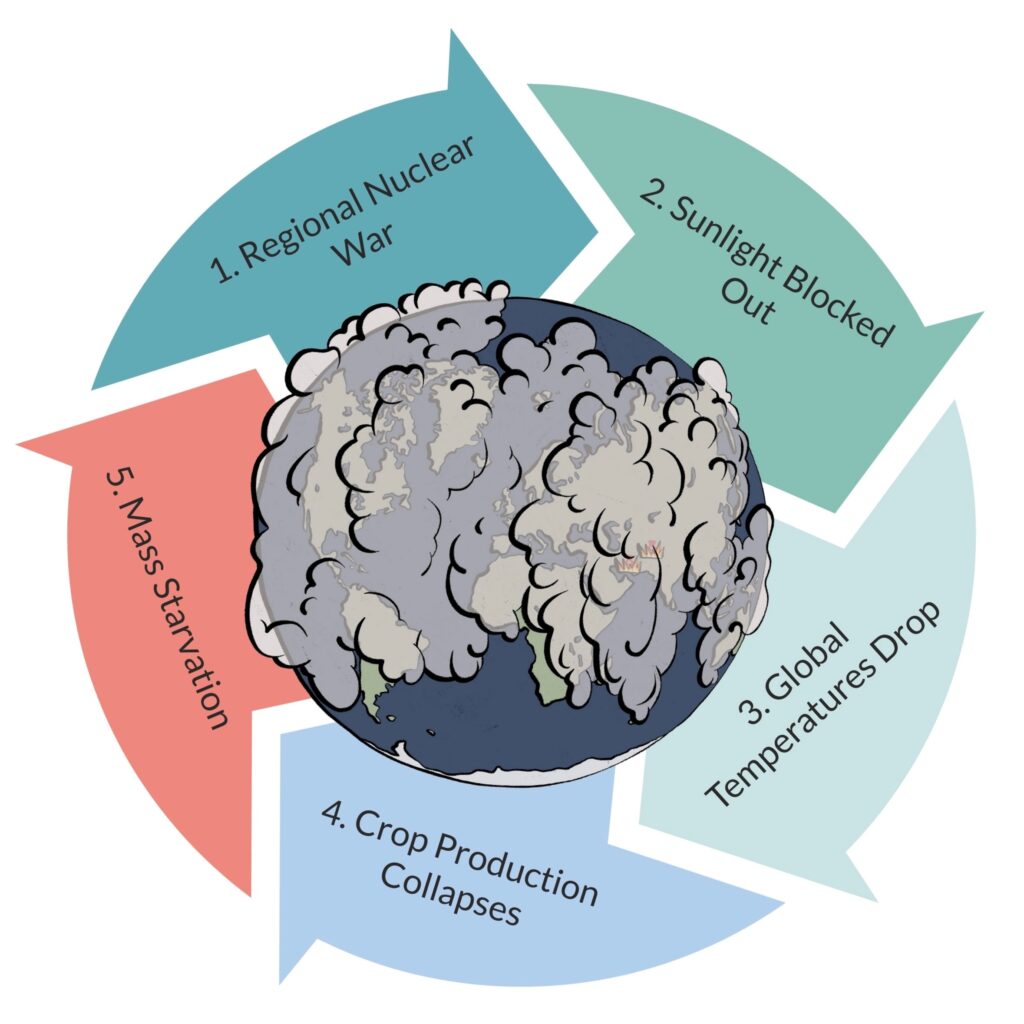
New research into the climate effects of the use of nuclear weapons shows that previous studies significantly underestimated global declines in food production and the numbers of people at risk of mass starvation.
[PRESS RELEASE]
Nuclear Famine
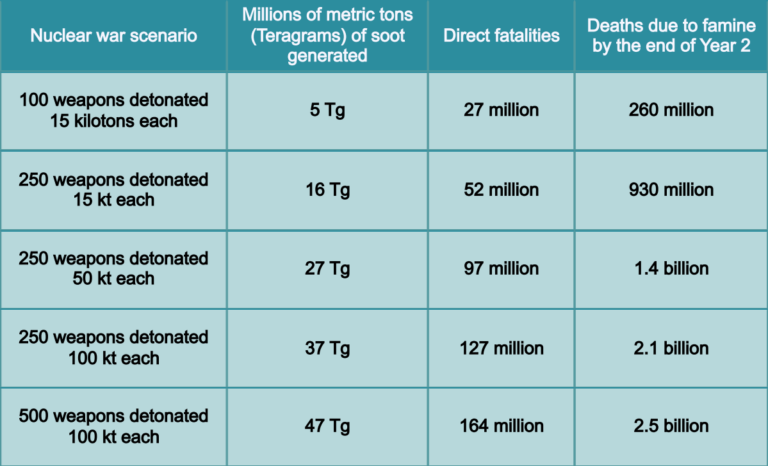
A nuclear war using as few as 100 weapons anywhere in the world would disrupt the global climate and agricultural production so severely that the lives of more than two billion people would be in jeopardy.
The second edition of IPPNW’s report Nuclear Famine: Two Billion People at Risk—Global Impacts of Limited Nuclear War on Agriculture, Food Supplies, and Human Nutrition explains how even the relatively small nuclear arsenals of countries such as India and Pakistan could cause long lasting, global damage to the Earth’s ecosystems.
Among the specific findings in Nuclear Famine, which was originally released in April 2012, are:
- Corn production in the US would decline by an average of 10% for an entire decade, with the most severe decline (20%) in year 5. Soybean production would decline by about 7%, with the most severe loss, more than 20%, in year 5.
- There would be a significant decline in middle season rice production in China. During the first 4 years, rice production would decline by an average of 21%; over the next 6 years the decline would average 10%.
- Increases in food prices would make food inaccessible to hundreds of millions of the world’s poorest. Even if agricultural markets continued to function normally, 215 million people would be added to the rolls of the malnourished over the course of a decade.
- Significant agricultural shortfalls over an extended period would almost certainly lead to panic and hoarding on an international scale, further reducing accessible food.
- The 925 million people in the world who are already chronically malnourished (with a baseline consumption of 1,750 calories or less per day), would be put at risk by a 10% decline in their food consumption.
The new findings, published in 2013, paint an even grimmer picture:
- Chinese winter wheat production would fall 50% in the first year and, averaged over the entire decade after the war, would be 31% below baseline.
- More than a billion people additional people in China would also face severe food insecurity. The total number of people threatened by nuclear-war induced famine would be well over two billion.
“The prospect of a decade of widespread hunger and intense social and economic instability in the world’s largest country has immense implications for the entire global community, as does the possibility that the huge declines in Chinese wheat production will be matched by similar declines in other wheat producing countries.,” said the report’s author, Dr. Ira Helfand.
Nuclear Famine is the second IPPNW publication to address the global health and environmental consequences of a nuclear war using only a fraction of the more than 15,000 nuclear weapons in the world today. Zero is the Only Option: Four Medical and Environmental Cases for the Eradication of Nuclear Weapons, published in 2010, describes the severe climate disruption that would result from a “limited” nuclear war, and summarizes the medical consequences of blast, heat, and radiation from nuclear explosions.
Follow the links in the highlighted resources box (above) for more detailed information, including fact sheets, scientific papers, and a Powerpoint presentation that can be used by doctors, medical students, and grassroots activists to disseminate these findings and explain their importance.
For more information about IPPNW’s work to educate the public and policy makers about the medical, environmental, and humanitarian consequences of nuclear war, contact Chuck Johnson.