International Physicians
for the Prevention of Nuclear War

Climate and Nuclear Weapons

Twin Existential Threats

Among the many crises in the world, two man-made hazards threaten the very existence of humankind: 1) the ongoing and accelerating global climate crisis and 2) the growing threat of nuclear war. 

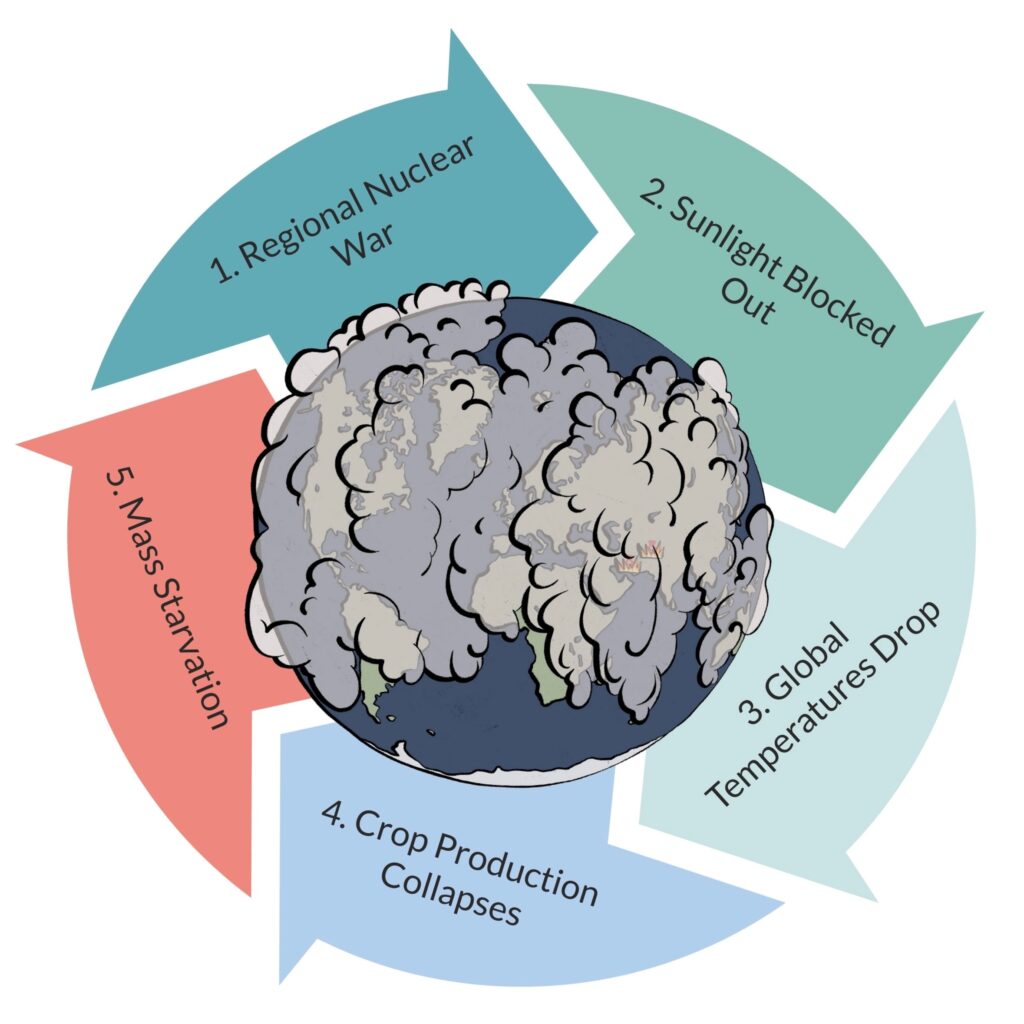
There are many important links between the two crises, and both have the ability to crash the global climate. The climate crisis is already having clear adverse effects on health, the environment, and peace and security. On the other hand, nuclear weapons are a climate crisis waiting to happen. While it was established during the Cold War that all-out nuclear war could cause a “nuclear winter,” 21st Century research reveals that even a relatively “minor” exchange of nuclear weapons, such as between India and Pakistan, could crash the global climate by lofting massive amounts of soot into the stratosphere, causing a global cooling.

Moreover, one threat exacerbates the other:

The climate crisis is already harming health through more frequent extreme weather events, food system disruption, the spread of zoonotic and infectious diseases, and worsening mental health. As a threat multiplier, it erodes the social determinants of health and deepens the root causes of conflict and instability. Continued global warming is expected to cause mass human migration and competition for increasingly scarce resources, leading to a spiral of conflict, violence and war, including among nuclear-armed states.

At the same time, the existence and potential use of nuclear weapons continues to erode global cooperation and build instability in the face of the shared climate threat.  Nuclear weapons production is a massive resource sink, taking away from efforts to mitigate the climate crisis and associated public health crises.  All steps of the nuclear weapons production cycle are disastrous to the environment, from carbon emissions during production and environmental costs of associated militarism, to radioactive waste and environmental contamination.

Climate change multiplies the potential for conflict over resources such as land, drinking water and food reserves, and increases the pressure to migrate. Political collapse, in turn, leads to extremist leaders gaining control over nuclear weapons, which poses a risk in regions where there already is political tension.
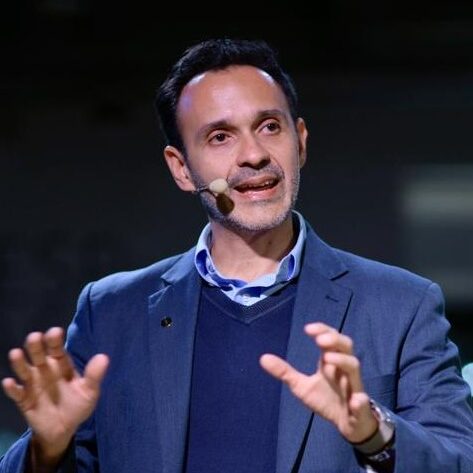
Dr. Carlos Umaña
IPPNW Co-President
Enormous health benefits can be by overcoming our “fossil-fuel addiction” and rejecting militarised approaches to power. Both issues are a fight for human and planetary survival that require a mobilized global citizenry pressing for urgent action to cut greenhouse gas emissions and to ban and eliminate nuclear weapons. 

However, whereas climate change is a top-level public concern, nuclear weapons receive very little attention.  Even with demonstrably unprincipled and ill-equipped leaders in command of these omnicidal weapons, the grave, immediate threat they pose remains beneath public notice.  This must change.

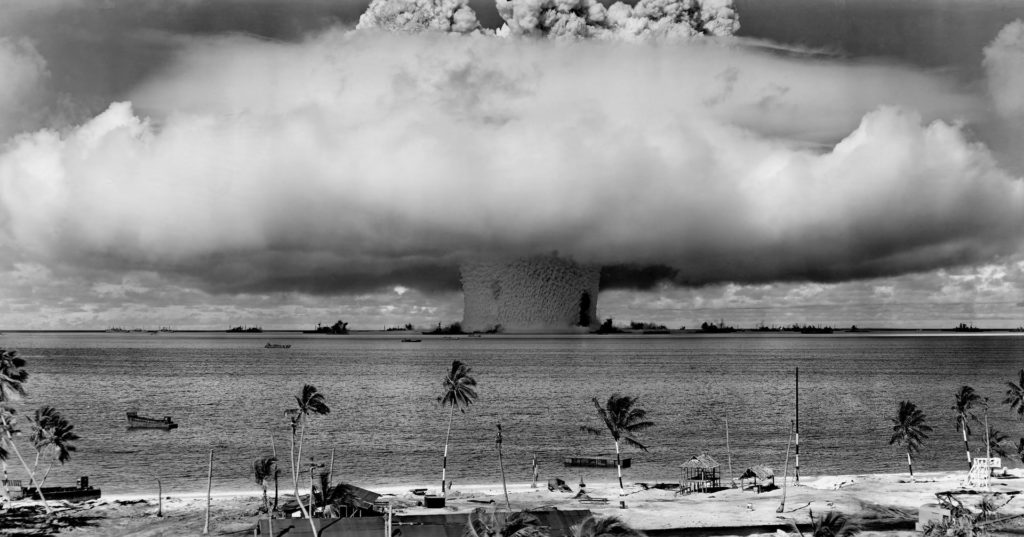
Mushroom-shaped cloud from the underwater nuclear test at Bikini Atoll; July 1946.

Climate News

Nuclear Famine

A nuclear war using as few as 100 weapons anywhere in the world would disrupt the global climate and agricultural production so severely that the lives of more than two billion people would be in jeopardy from mass starvation. 

A landmark report, Nuclear Famine (2022), published by IPPNW summarizes the latest scientific work which shows that a so-called “limited” or “regional” nuclear war would be neither limited nor regional. A war that detonated less than 1/20th of the world’s nuclear weapons would still crash the climate, the global food supply chains, and likely public order. Famines and unrest would kill hundreds of millions, perhaps even billions. The findings come at a time of greatly heightened tensions among nuclear states and amid warnings that we are closer to nuclear war than we have ever been. 

IPPNW engagement at the UN Climate Change Conference

IPPNW is a recognized observer under the United Nations Framework Convention on Climate Change (UNFCCC). Our delegations participated in COP28 in Dubai, COP29 in Baku, and the SB62 sessions in Bonn. We bring the vital perspective of human and environmental health to the table.

IPPNW recognizes that on issues of health, nuclear risks do not have borders. Nuclear power is not the solution to the climate crisis.  IPPNW challenges this false hope at the COP meetings.  Nuclear power is too slow, too costly, harbors risk of nuclear weapons proliferation, and represents humanitarian dangers through the risk of meltdown, uranium mining, and handling and storage of nuclear waste.

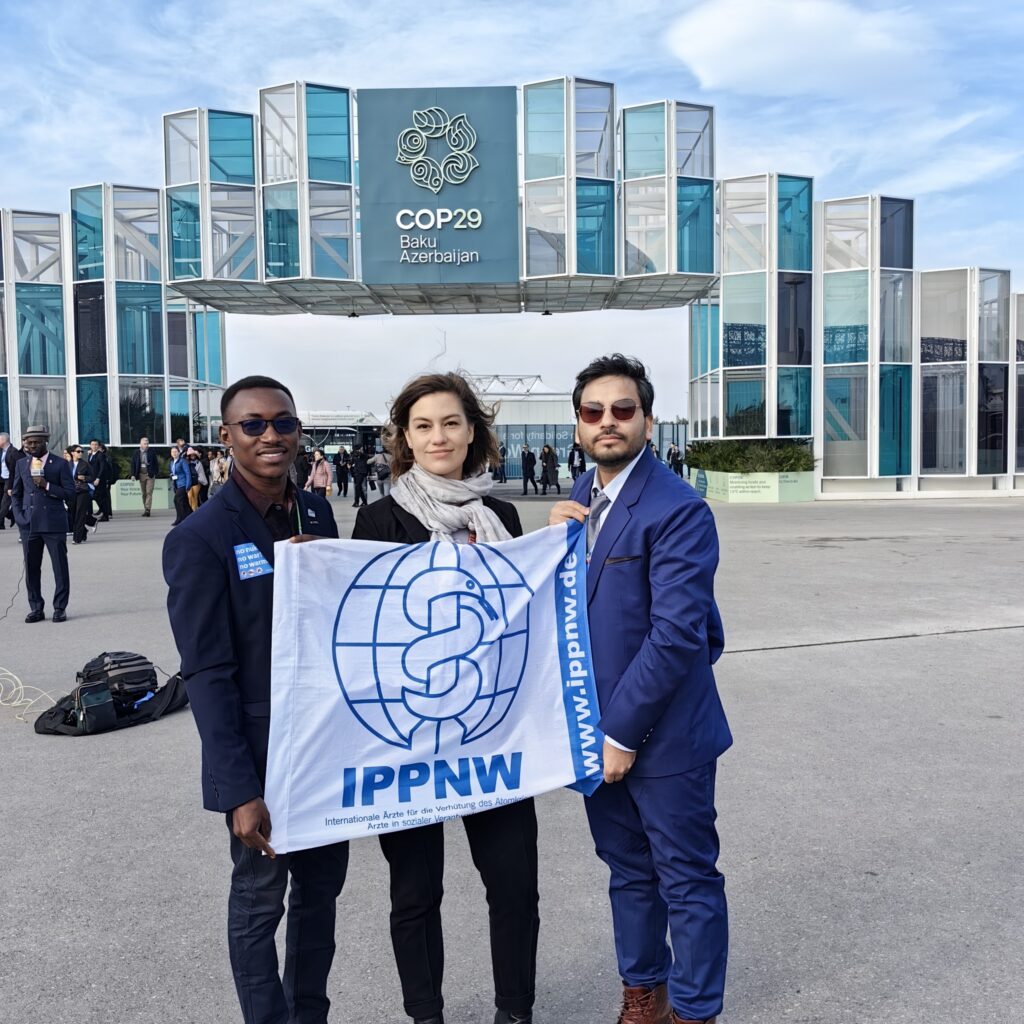
(l-r) Dr. Yusuf Dominic, Laura Wunder, and Dr. Bimal Khadka outside of COP29 in Baku, Azerbaijan
There cannot be health without peace, and there cannot be peace without health

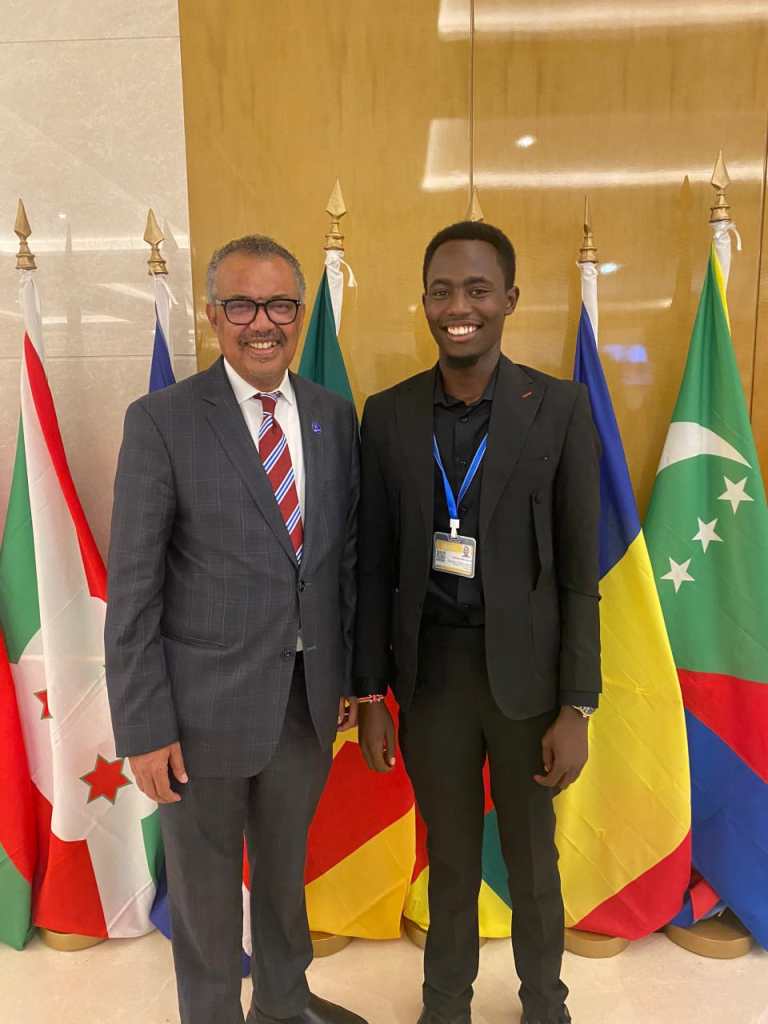
Dr. Tedros Ghebreyesus
WHO, General Director
This work is coordinated by the IPPNW’s Climate Emergency Working Group established at the 23rd World Congress in Mombasa. The group convenes monthly, connecting health professionals from across continents to share expertise, exchange insights, and collaborate on joint projects. For more information contact Molly McGinty.

Additional Resources