
International Physicians
for the Prevention of Nuclear War

Humanitarian Impacts of Nuclear Weapons

Nuclear weapons pose the most acute existential threat to humans and the environment. Unlike conventional weapons or other weapons of mass destruction, nuclear weapons instantaneously wipe out entire populations, level cities, and devastate the environment. Moreover, they produce radioactive contamination that causes a life-long risk of cancer and other illnesses.  

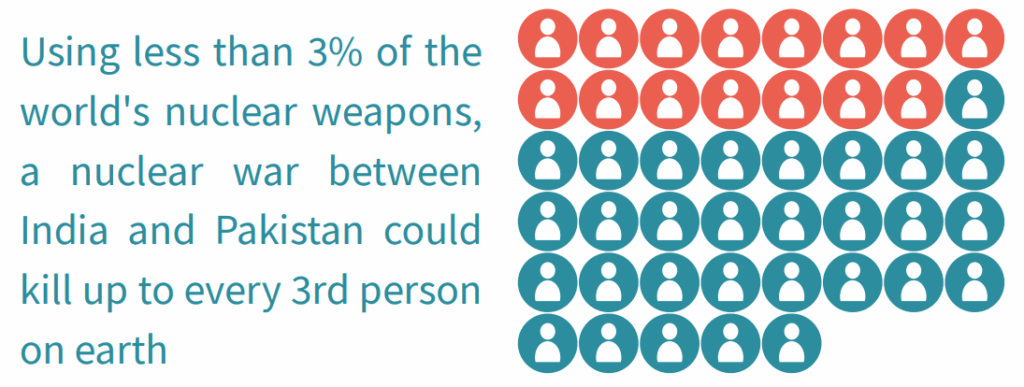
A nuclear war involving just 3% of the world’s nuclear weapons could kill up to every 3rd person on earth.

There are numerous ways in which nuclear weapons cause extensive harm to health and the environment even if they are not used in war. The front end of the nuclear chain—the mining and processing of uranium that provides the fuel for nuclear weapons—has devastating health consequences for those who work in the mines and mills and for their families.

The humanitarian impacts of nuclear weapons are at the heart of IPPNW’s work.

What are the health impacts?

Hiroshima and Nagasaki

infrastructure damage in the ruins of Hiroshima exacerbate the humanitarian impacts of nuclear weapons
Hiroshima after the US atomic bombing on August 6, 1945

The 12.5-kiloton bomb detonated over Hiroshima decimated the city and created ground temperatures that reached about 7,000 degrees Celsius. Of the 76,000 buildings in the city, 92% were destroyed or damaged. There were more than 100,000 deaths and approximately 75,000 injuries among a population of nearly 250,000. Of the 298 physicians in the city, 270 died or were injured and 1,564 of 1,780 nurses died or were injured.

The 21-kiloton bomb detonated over Nagasaki three days later leveled 6.7 square kilometers (2.6 square miles). There were 75,000 immediate deaths and 75,000 injuries, and health consequences for the population of the city that were similar to those of Hiroshima.

A nuclear war with weapons in existing arsenals could kill more people in a single day than were killed during the entire Second World War.

No Meaningful Response

As we saw in the immediate aftermath of Hiroshima and Nagasaki, nuclear weapons eradicate the social infrastructure required for recovery from conflict. Roads and transportation systems, hospitals and pharmacies, fire fighting equipment, and communications would all lie in rubble throughout a zone of complete destruction extending for miles. The International Committee of the Red Cross and other major disaster relief agencies have said they would be unable to respond in any meaningful way to help the survivors of a nuclear war. 


No meaningful medical or disaster relief response to the detonation of nuclear weapons is possible.
International Council of Nurses (ICN), International Federation of Medical Student Associations (IFMSA), International Physicians for the Prevention of Nuclear War (IPPNW), World Federation of Public Health Associations (WFPHA), World Medical Association (WMA)
Physical effects of nuclear weapons

Nuclear weapons unleash the binding forces that power the stars to produce incinerating heat, powerful shock waves and overpressures, and ionizing radiation. Unlike conventional weapons or other weapons of mass destruction, nuclear weapons instantaneously wipe out entire populations, level cities, and devastate the environment. Moreover, they produce radioactive contamination that causes cancers and other illnesses that can persist across generations for millennia.

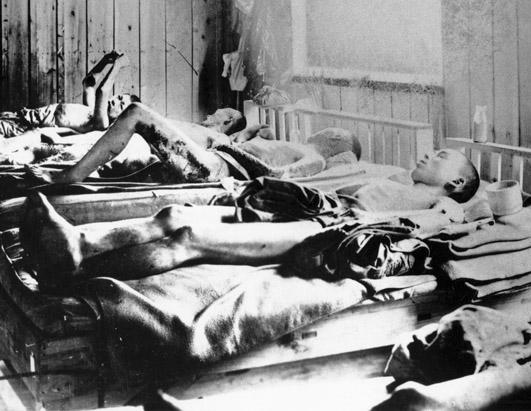
radiation victims in Hiroshima, the humanitarian consequences of nuclear weapons are catastrophic.
Radiation victims in Hiroshima

Blast and burn effects

 Anyone in the immediate vicinity of the blast will be instantly vaporized by the thermal wave.

Even a single nuclear explosion over a city can kill tens of thousands — even hundreds of thousands — of people immediately. Massive overpressures destroy most buildings; temperatures exceeding thousands of degrees Celsius incinerate all flammable materials; intense winds create firestorms.

Those who survive the immediate detonation will suffer:

  • Third degree burns on exposed skin;
  • Crush injuries, including ruptured organs [particularly lungs], fractured skulls, and compound fractures;
  • Sudden deafness due to ruptured eardrums; and
  • Temporary blindness by the initial flash.
 

Since doctors and nurses will be among the victims, and area hospitals will be destroyed or damaged, surviving medical services will be unable to assist those in need.

Ionizing radiation effects

Nuclear weapons release ionizing radiation as a result of the uncontrolled chain reaction of fissile materials. Exposure to radiation—including fallout from nuclear explosions—causes acute and long-term illnesses that are often deadly, as well as genetic and inter-generational health effects.

Acute radiation sickness can be fatal within hours, days, or weeks due to:

  • Bone marrow destruction, leading to extreme susceptibility to infection and uncontrolled internal bleeding;
  • Impaired healing;
  • Irreparable gastrointestinal damage and dehydration; and
  • Central nervous system dysfunction


Radiation also has long-term effects:

  • Multiple types of cancer (leukemia, multiple myeloma, thyroid, stomach, colon, lung, breast cancer, among others)
  • Cardiovascular disease
  • Cataracts
  • Birth defects
  • Infertility and subfertility
  • Hemorrhaging, infections, and more

Nuclear Winter

A limited, regional nuclear conflict involving only 100 Hiroshima-size nuclear weapons would severely disrupt the global climate and agriculture for two decades or more. The resulting food shortages would place at least two billion people at risk of starvation. The massive arsenals held by the US and Russia can create a nuclear winter, destroying Earth’s fundamental ecosystems, on which all life depends.

Nuclear "Testing"

Over the years that followed the bombings of Hiroshima and Nagasaki, at least 2,056 nuclear weapons were detonated as “tests,” in the atmosphere, underwater, and underground. Most took place in colonies, former colonies, or in the territories of ethnic minorities: in the Marshall Islands, French Polynesia, Kiribati, as well as Semipalatinsk, Kazakhstan; on traditional Western Shoshone land in Nevada, USA, in Aboriginal lands in the Australian outback, on indigenous Nenetz’ land in the Russian Arctic, in desert communities in Algeria, in the Uighur region of China, and elsewhere. 

The radioactivity released by above-ground nuclear tests has spread through the atmosphere across the globe, resulting in about 430,000 additional cancer deaths due to cumulative radiation doses by the year 2000 alone. In the long term, at least 2 million additional cancer deaths can be expected due to the longevity of many radioactive isotopes.

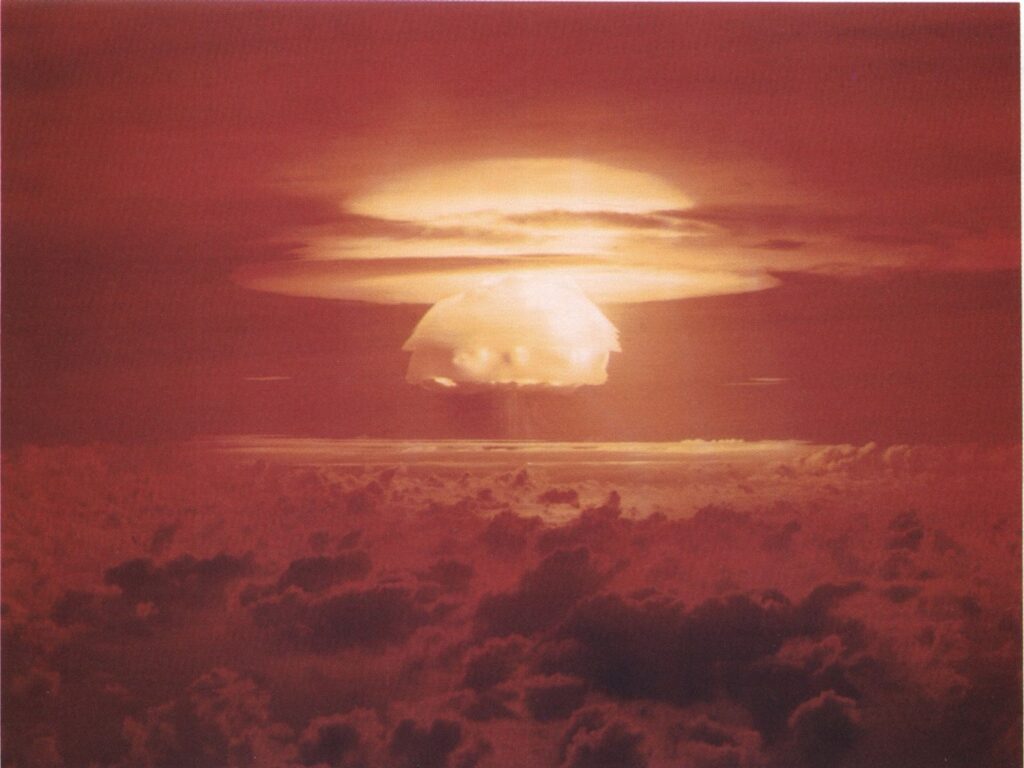
Castle Bravo U.S. nuclear test in the Marshall Islands

Nuclear Weapons Violate International Humanitarian Law

Nuclear weapons are indiscriminate in their effects. They cannot distinguish between military and civilian targets, or between combatants and non-combatants. This is considered a violation of International Humanitarian Law (IHL), according to both the Geneva Conventions and the International Court of Justice (ICJ).

In light of the existential threat posed by nuclear weapons, IPPNW advocates for the total abolition of nuclear weapons as it is the only way to ensure the health, safety, and security of humankind.  We advocate for abolition through the United Nations Treaty on the Prohibition of Nuclear Weapons.