About IPPNWNewsEventsProgramsPublications and ResourcesAffiliatesSupport IPPNWContactSearchFAQHome
In This Section

Nuclear Abolition and ICAN

Small Arms and Aiming for Prevention

The Small Arms Threat

Affiliate Initiatives

International Initiatives

News

Publications

Links

Campaign Materials

Peace Through Health

Programs (main page)

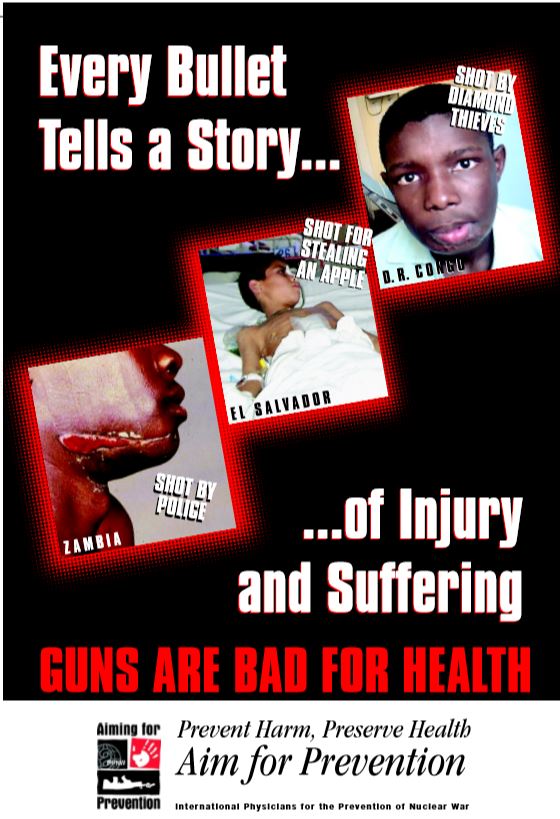
Aiming For Prevention logoAiming for Prevention

Conference Report

2nd Biennial Meeting of States on the UN Programme of Action on Small Arms (UNPoA) and Light Weapons
New York City
July 11-15, 2005

IPPNW Central Office staff and affiliate leaders from Africa, South Asia, and Latin America gathered at the United Nations in New York City at the Second Biennial Meeting of States on the Programme of Action (UNPoA) on Small Arms to help announce the formation of the new International Action Network on Small Arms (IANSA) Public Health Network (PHN), coordinated by IPPNW. IPPNW doctors from India, Zambia and El Salvador expressed their deep concern about the human suffering caused by the misuse of small arms in a variety of venues and sessions.

As the coordinator of the new PHN, IPPWN co-sponsored a panel on small arms and public health entitled "Aiming for Prevention: The Public Health Dimensions of Small Arms Violence and the UN Programme of Action," that included case studies and "One Bullet Stories." Speakers included Dr. Kathy Kaufer Christoffel, IANSA Board member and advisor to the PHN and HELP founder; Dr. David Meddings of the World Health Organization (WHO); Dr. Vic Sidel of IPPNW and Physicians for Social Responsibility USA; Dr. Diego Zavala of the Ponce School of Medicine in Puerto Rico; and Drs. Mtonga and Crespin.

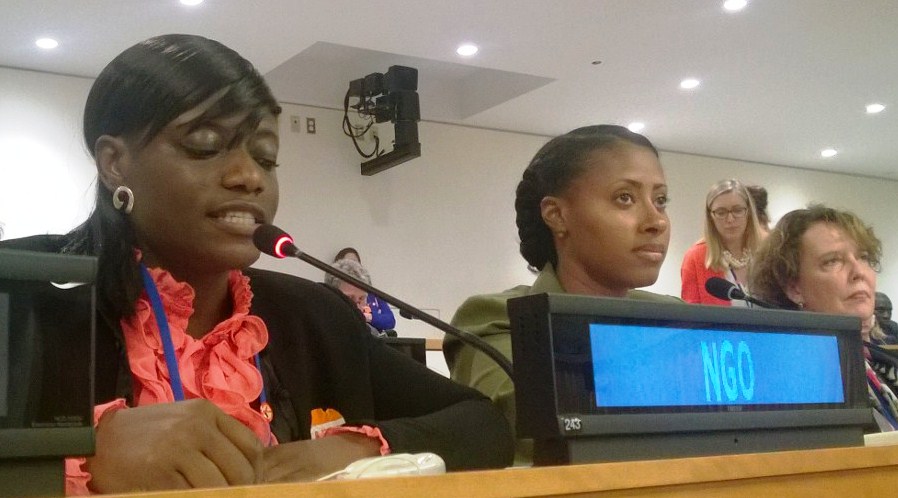
Two affiliate leaders, Dra. Emperatriz Crespin, IPPNW/El Salvador, and Dr. Robert Mtonga, IPPNW/Zambia, were selected to address the assembly of delegates at the UNPoA meeting during the NGO presentation on the third day of the weeklong meeting. They discussed the need to apply proven health practices to international efforts to reduce deaths, disabilities and injuries related to the misuse of small arms and light weapons, and shared physicians' field experiences.

A PowerPoint presentation of the "One Bullet Story" developed by Dr. Walter Odhiambo and others at IPPNW/Kenya was shown on the giant UN screen, and helped drive the point home.

Another major goal of IPPNW's mission to the BMS was to meet and talk with delegates from IPPNW affiliate countries and those that might be sympathetic to our issues, to raise our concerns and make contacts for follow-up. One of the most exciting moments came after we met with the El Salvadoran delegates and they subsequently included a mention of MESARES (IPPNW/El Salvador) work in El Salvador in their official statement. On other notes, Dr. Mtonga was instrumental in encouraging representatives from outside the defense ministry of his home country Zambia to attend the meeting, and IPPNW's Dr. Balkrishna Kurvey met with the Indian delegation and established a rapport for follow-up.

We all participated in as many side events as possible, where we raised health concerns, as well as local IPPNW programs we thought were making a difference. Examples include a session on civilian gun possession at which Dr. Crespin spoke about her success in El Salvador in using research for advocacy, and a session on National Focal Points where Ms. Valenti raised the question of health representation on country commissions.,

The Arias Foundation screened their documentary "Weapons of Violence," in which Dra. Crespin and her husband Dr. Ademar Guardado, both appeared in several segments. Dr. Crespin was introduced afterward and answered questions.

IPPNW plans to participate in a similar fashion in the upcoming UNPoA Prepcom, and Review Conference, to be held in January and July 2006, respectively.

Posted October 14, 2005