News and Events

Bulletin of the Atomic Scientists: Doomsday clock moves one minute closer to midnight
January 10: It is five minutes to midnight. Two years ago, it appeared that world leaders might address the truly global threats that we face. In many cases, that trend has not continued or been reversed. For that reason, the Bulletin of the Atomic Scientists is moving the clock hand one minute closer to midnight, back to its time in 2007.

Medical Alert for a Strong Arms Trade Treaty
December 14: Aiming for Prevention alerted medical and public health professionals to sign an important petition which will be delivered to key negotiators at the UN during the ATT Review Conference in 2012. Add your name to the petition supporting a strong and humanitarian-based ATT.

Red Cross/Red Crescent movement calls for abolition of nuclear weapons
November 26: In an historic decision, the Council of Delegates of the International Federation of Red Cross and Red Crescent Societies adopted by acclamation a resolution calling for the abolition of nuclear weapons and calling on all national societies to conduct educational campaigns about the unique, catastrophic humanitarian consequences of nuclear war. The resolution was first proposed by the national societies of Norway, Japan, and Australia, and has been the subject of intense internal debate within the Red Cross movement for the better part of the last year.

Most recent Vital Signs newsletter is now online
The biannual international newsletter is available online. Monthly donors in the US can opt to receive a paper copy of the newsletter by contacting gfitzgerald@ippnw.org.

Indian doctors consider alternatives to nuclear energy
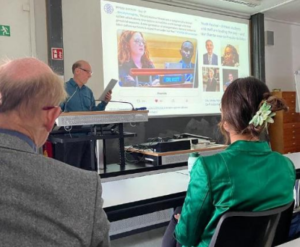
October 20: IPPNW’s Indian affiliate held an interactive session on nuclear energy at the India International Centre in New Delhi. Professor Andreas Nidecker, President IPPNW Switzerland, and General Vinod Saighal were the featured speakers. The session was moderated by Dr. L.S. Chawla, President of IDPD.

Strengthening Partnerships
October 12: Dr. Balkrishna Kurvey, one of IPPNW’s long-time leaders on armed violence prevention in India, has been elected to the International Advisory Council of the International Action Network on Small Arms (IANSA).  Dr. Kurvey, along with his physician wife Nalini, founded, the Indian Institute for Peace, Disarmament & Environmental Protection (IIPDEP), where they have worked tirelessly on the issues of small arms proliferation, landmines, and nuclear weapons.

Reflections on Hiroshima, Nagasaki, and Fukushima: Are we witnessing the beginning of the end of the nuclear age?
By Dr. Masao Tomonaga of IPPNW's Japanese affiliate.
"For 66 years the nuclear age has continued. Now, however, we see the beginning of its slow demise, because nuclear bombs and nuclear power plants have failed to bring safety and peace to global human society. We physicians should help them cease as early as possible."

Contributing to arms trade treaty discussions
July 11-15: IPPNW held a panel at the UN on how how health sectors of civil society can play a role in implementing a strong ATT. On Thursday, members met with US Ambassador Donald Mahley and discussed the public health role health professionals can provide in the reporting and monitoring of arms activity.

ICAN launched in Africa!
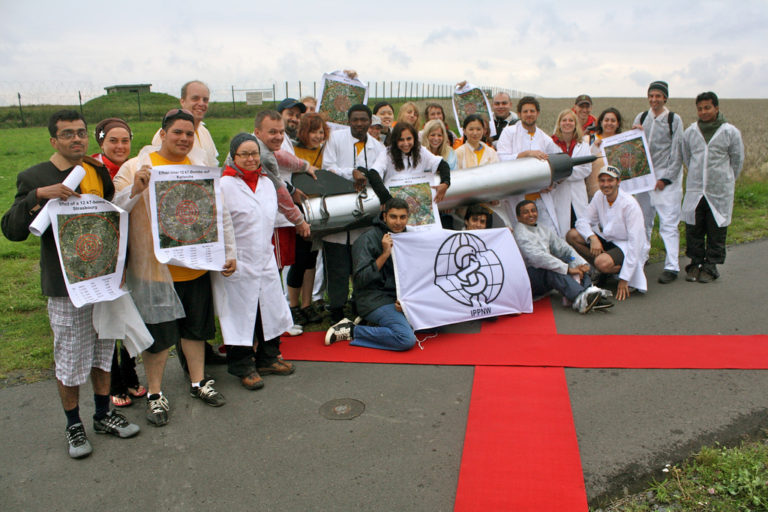
July 7: In conjunction with the African Regional Meeting in Livingstone, Zambia, African affiliate members launched ICAN Africa. Young doctors also organized two Target X installations to bring awareness to nuclear weapons issues.

>> MORE NEWS