logo

Safe Nuclear Disarmament:
Protecting Health and the Environment on the Road to Abolition

Merav Datan, JD

Abstract

The culture of nuclear weapons production gave inadequate attention to health, safety, and the environment. These concerns must be paramount as nuclear weapons are dismantled and destroyed. Patterns established by weapons facilities, where production, security, and secrecy have been the dominant values, undermine confidence in the ability of these institutions to make such a transition successfully. Major new research and policy agendas are required to ensure that approaches to nuclear disarmament are consistent with the larger purposes of the abolition paradigm. [M&GS 1999;6:12-17]

The effects of nuclear weapons production, testing, and use on health and the environment have been studied and debated for many years [1-11], almost always under the assumption that nuclear weapons would remain at the foundation of the security system for the indefinite future [12]. Nuclear industry safety standards and the policies affecting health and the environment evolved in a Cold War context, where national security in the form of nuclear deterrence was the priority. In addition, the past few decades have produced institutions and economic interests that depend on the maintenance of a nuclear arsenal. The social and political culture that supports this infrastructure values high technology weapons and security through military domination. Reduced reliance on military solutions to security concerns, or the attainment of security through health, education, economic stability, and human rights, are alien to this point of view.

Advocates of nuclear disarmament, on the other hand, have as their purpose the protection of global health and the environment. Both the immediate and the long term goals of nuclear disarmament, therefore, require institutional and cultural shifts that delink dismantlement of nuclear weapons and disposition of nuclear materials from the policy of national security through nuclear deterrence. A framework for reducing nuclear arsenals that endangers the health of workers or surrounding communities, or that creates long term risks to the environment, would defeat the purpose of nuclear disarmament.

Nuclear disarmament presents some of the same challenges to health, the environment, and safety that nuclear weapons production presents because both activities involve exposure to radioactive and toxic materials during handling and transportation. To date, dismantlement has taken place in the US at the Pantex facility in Texas and in four facilities in Russia, with US assistance. A true infrastructure for nuclear disarmament does not yet exist, however, because dependence on nuclear weapons and on the policy of deterrence is still the larger context for these limited disarmament activities [13,12].

This paper examines the preliminary questions relevant to developing a framework for large scale nuclear disarmament that is as benign as possible to health and the environment. Nuclear disarmament and the cleanup of nuclear weapons facilities--whether or not a small arsenal or even a single warhead is maintained--create risks of exposure to radioactive materials and toxic chemicals and raise questions about storage, short and long term disposition, and non-proliferation. Whether nuclear disarmament continues at the current snail’s pace, picks up steam and leads to deep multilateral reductions of nuclear arsenals, or actually produces a nuclear weapon-free world, a major persistent issue will be what to do with old nuclear weapons, with the materials they contain, with the toxic and radioactive waste endemic to their manufacture and storage, and with numerous contaminated facilities and sites.1

Nuclear disarmament requires the same understanding of the properties and effects of radioactive and toxic materials as does maintaining a large nuclear arsenal. Nuclear war planners, however, have given far less consideration to health, safety, and the environment than to strategic concerns. Establishing health and safety practices that are somehow compatible with nuclear weapons production and the maintenance of a robust deterrence regime is a far different enterprise from dismantling nuclear weapons within an institutional culture where health, safety, and the environment are the top priorities.

The Information Gap

The information required to establish meaningful health and safety standards is inadequate, both because our understanding of nuclear radiation is limited and because the sources of information are generally biased. Within the US, where information on these issues is most widely available, the purveyors of safety standards and oversight are often government agencies or surrogates that are rarely truly independent. In the late 1980s, for example, oversight bodies such as the Advisory Committee on Nuclear Facility Safety and the Defense Nuclear Facility Safety Board were criticized for being “neither...sufficiently external nor sufficiently independent to fulfill a credible oversight function” [15]. Oversight has been further limited by security concerns that are said to demand secrecy.

Evidence of safety practices--as opposed to safety standards--generally comes from reports of “whistleblowers,” from documents filed in lawsuits, from judicial decisions, and from media-worthy stories (i.e., violations of safety and allegations of violations).2 For this reason, such information may not be the most accurate reflection of safety practices in general.

Safety Culture

The political culture in which health and safety standards have been developed for the nuclear industry has emphasized security over safety and secrecy over openness. DOE and its nuclear weapons facilities have touted a “safety culture,” one component of which is a Voluntary Protection Program that seeks to “eliminate workplace hazards by encouraging safety and health efforts by managers and employees” [17]. Pantex claims a commitment to “providing the safest work environment in Texas, the United States, or the world” [17].

Evidence from Pantex, however, suggests otherwise. In one case, six military nuclear production technicians working on the W55 warhead dismantlement program at Pantex brought a complaint against Mason & Hanger-Silas Mason Co. (Mason & Hanger)--the operator of the facility--that the company managed the program with gross disregard for worker safety. After a series of investigations, decisions, and appeals, the US Department of Labor found evidence of repeated management hostility toward those who raised safety issues. Among the tactics used by management was forcing a whistleblower to submit to an involuntary psychiatric examination. Mason & Hanger admitted to most of the allegations, including the reprisals, but attacked the motives of the complainants in a manner the court found “far-fetched” and “unprincipled” [18].

barrels of radioactive waste

Barrels of transuranic waste in temporary storage at the Department of Energy’s Savannah River Site in South Carolina are contaminated with plutonium. More than 300,000 such barrels from nuclear weapons production are buried or stored around the country. Photo: US Department of Energy.

The safety culture at the DOE weapons plants was studied in depth in 1990 by Physicians for Social Responsibility [15]. PSR found an overall management tradition that reflected a pattern of health, safety, and environmental violations. The study identified four main patterns of violations: “a) releases of radiation that threaten to expose the public; b) releases of radiation that threaten to expose workers; c) inattention to existing health and safety rules and regulations; d) deliberate attempts to conceal or suppress any or all of the above” [15]. The study also uncovered two potentially conflicting missions within the nuclear weapons complex and concluded that “adherence to one mission, the production of nuclear weapons, has occurred at the expense of the other, the protection of the health and safety of the workers and the public” [15]. Moreover, DOE lacked a philosophy or infrastructure that could address public health and safety needs. Emphasis was placed on production and secrecy over safety.

Retaliation Against Whistleblowers

Much of the information about safety practices derives from legal actions by whistleblowers and includes accounts of retaliation against those who have insisted on raising safety concerns. One nuclear auditor who was awarded emotional distress damages, back pay, and reinstatement after 10 years of litigation and dismissal from two US nuclear facilities commented:

“The nuclear industry never forgives, never forgets the whistleblower. Unlike many others, I have survived in my career, but my professional life is forever stained by the retaliatory actions.... My greatest hope is that the industry will heed the...ruling and change its scorched earth policies towards people like me that try to do the right thing” [19].

Problems with plutonium handling at Lawrence Livermore National Laboratory led to an investigation by the US Occupational Safety and Health Administration (OSHA), which found that an employee who had raised concerns about violations reported by an Incident Analysis Committee had been demoted “in such a manner that the action was perceived by other employees as retaliation against him by management because of his involvement in protected activity” [20].

Former US Energy Secretary Hazel O’Leary testified that during the early to mid-1990s there had been an “agencywide” pattern of reprisals against whistleblowers. Concern about this pattern contributed to the establishment of a new DOE “zero tolerance” safety initiative in 1998 [21]. Voluntary protection measures and claims of “zero tolerance” for serious injury have not yet transformed the DOE culture, however, suggesting that the nuclear industry continues to resist holding health, safety, and the environment as its highest priorities.

Uncertainty About Radiation

In matters that relate to nuclear radiation, opinions tend to be diametrically opposed: some researchers consider any and all exposures to radiation, including low-level ionizing radiation, potentially dangerous; others promote discrete, potentially positive uses of radiation or of end products that incorporate radioactive materials, while downplaying the significance of alleged risks. This is further complicated because the long term effects of nuclear radiation on individuals, on the environment, and on future generations cannot be fully known. Nor is there consensus on the effects of low-level radiation or exposure to low doses over an extended period of time within the lifetime of an exposed individual [22-24].

Uncertainty about the nature and effects of nuclear radiation complicate safety planning and consideration of environmental effects. This uncertainty supports a range of violations and potential violations. For example, one DOE health and safety manager explained the department’s failure to take inexpensive steps to protect those involved in the transport of nuclear weapons, including better radiation training, laundry facilities for contaminated clothing, and routine bioassay tests, by saying that such measures would have threatened the couriers’ morale and might have led them to believe there was reason to be concerned [25]. Uncertainties about the risks of various activities will complicate the development of adequate safety standards and could influence worker attitudes toward risky tasks.

Nuclear Disarmament: The Risks to Workers

Nuclear disarmament involves handling, transporting, and storing radioactive and toxic materials. In each of these areas, new systems and practices will have to be implemented, often based on new research, to ensure that the process of disarmament does not lead to the same kinds of health, safety, and environment problems that were caused by weapons production. What follows is an overview of current US practice.

Handling and Dismantlement

Dismantling nuclear weapons comprises separating the weapon into segments; dismantling individual segments; removing and crushing the outer casing; handling the “physics package,” which includes the plutonium pit and chemical high explosives [11]; and storing the materials until a method of disposition is found.

open waste pit

Contaminated rubble and soil from the demolition of a uranium processing facility and debris from a munitions factory and chemical plant have been dumped in Weldon Spring Missouri. The detritus of the nuclear age will be a long term health and safety problem as the transition is made from nuclear weapons production to disarmament. Photo: US Department of Energy.

The US presently has only one facility for disassembling nuclear warheads: the Pantex plant in Amarillo, Texas. The prime DOE contractor for Pantex operations is Mason & Hanger, which employs 2,950 workers. Pantex describes its “single largest success” as its “impressive safety record during its many years of operation,” [26] a safety record that has been disputed by citizen activists such as Serious Texans Against Nuclear Dumping (STAND).

Transportation

DOE maintains three nuclear weapons courier divisions operating from Pantex, Albuquerque, and Oak Ridge. Couriers who transport nuclear materials, including live warheads, to and from various DOE plants and military bases face the dangers of accident and terrorist attack, as well as risks associated with routine contact with nuclear materials and radiation. The couriers are armed, escorted, and authorized to use deadly force while protecting a weapons shipment. Security concerns, however, have precluded these couriers from wearing protective clothing so that they will not stand out or attract attention.

Information about the couriers’ tasks, with a few exceptions, has been acquired largely from anonymous sources. One exception is the case of a courier whose baby daughter, born with three rare forms of brain cancer, died at the age of four months. Medical evaluations revealed chromosomal damage in the father. According to one watchdog group, a federal judge who heard testimony about agency practices such as harsh working conditions, 36-hour road trips, and possible radiation exposure, found that “courier duties, without better health and safety measures, posed a specific and objective danger to health” [27].

Other nuclear weapons couriers have testified to numerous concerns, including routine exposure to radiation while loading, unloading, and checking packages; trailers that set off radiation monitors upon entry and exit at DOE bases and at ports of inspection when traveling across state lines; and training exercises that required crawling through a field that later turned out to be radiologically contaminated [28].3

Storage

Disarmament raises complex questions about interim and medium term storage, and provokes intense disagreements about long term storage and disposition. The current surplus of fissile material “outstrips what nuclear facilities were designed to handle” and requires “upgrading storage capacity and oversight systems in place in order to guard against the threat of diversion and the risk of accident” [29].

Agreements undertaken by the US and Russia may overburden the currently existing infrastructure necessary for dismantling and storing plutonium and highly enriched uranium [30]. Pantex is already experiencing shortages of storage space for plutonium pits. The ultimate disposition of the plutonium is the subject of heated debate [31].

Concerns about the cleanup of nuclear weapons facilities include the extremely dangerous nature of the materials involved, the inadequacy of scientific foundations for the required work, a history of secrecy and deception, difficulty in setting goals and priorities, and inadequacy of the current contracting system [32]. Cleanup of nuclear weapons facilities is necessary and ongoing work linked to the above tasks. Though recognized as a need within the nuclear weapons industry, current practice and planning related to cleanup have many shortcomings.

Secrecy, Productivity, and Safety

Secrecy in the name of national security has an impact on safety planning. Nuclear weapons “are subjected to environments and/or activities which could result in a lost or missing weapon or component” [33] and government regulations require that information about such incidents remain secret because it could “assist in the development or use of weapons of mass destruction” [34].

Requirements for speed also have an effect on the adequacy of safety and security protocols. Protective measures can slow down nuclear production activities and may seem “cumbersome” or “unnecessary” [35]. In some cases workers themselves may neglect to undertake full safety precautions. In others, management places an emphasis on production to the detriment or perceived detriment of employee safety. DOE may have violated its own radiation management rules, according to one careful study [15].

Towards a Framework for Safe Nuclear Disarmament

The tasks essential to large scale nuclear disarmament require more attention and research than they have received to date. The existing political and cultural dependence on nuclear weapons--the context in which activities essential to nuclear disarmament currently take place--may not lend itself to the development of a framework for safe, secure, and irreversible nuclear disarmament [36]. Such a framework can only be established through the focused efforts and recommendations of a truly independent body, comparable in stature to the National Academy of Sciences. Such a body must consider a number of crucial questions (see box: Key Research Questions for Safe Nuclear Disarmament).

The search for answers to these questions will help prepare the transition from a world that views nuclear weapons as the bedrock of national security, in pursuit of which we must be prepared to accept health, safety, and environmental risks, to a world that views nuclear weapons as an unacceptable threat to security that must be eliminated in pursuit of health, safety, and environmental values.


Footnotes

1. This preliminary overview of the health, safety, and environmental concerns relevant to nuclear disarmament focuses on the United States because of the relative abundance of information and available research. The health, environmental, and safety problems within the nuclear weapons complex of the former Soviet Union are believed to be dramatically more alarming than those in the US [14]. [Return to text]
2. Much of the information about current practices comes from organizations such as the Government Accountability Project, Physicians for Social Responsibility, the Military Toxics Project, and Serious Texans Against Nuclear Dumping--non-governmental bodies that represent whistleblowers and that monitor weapons complexes, but that lack access to sensitive or classified government sources. Government sources generally declare a dedication to health, the environment, and safety but do not offer concrete evidence or examples of relevant practices. Rather, their analyses and select advisory bodies tend to argue for reductions in safety standards [16]. [Return to text]
3. A related unexplored issue is the risk of exposure to the general public as a result of transporting radioactive materials along public highways. [Return to text]


References

1. Glasstone S, Dolan PJ (eds). The effects of nuclear weapons. 3rd edition. Washington, DC: DOD/DOE. 1977. [Return to text]
2. Office of Technology Assessment. The effects of nuclear war. Washington, DC: OTA. 1979. [Return to text]
3. Chivian E, Chivian S, Lifton RJ, Mack JE (eds). Last Aid: The Medical Dimensions of Nuclear War. New York: W.H. Freeman. 1982. [Return to text]
4. Peterson J (ed). The aftermath: The human and ecological consequences of nuclear war. New York: Pantheon Books. 1983. [Return to text]
5. Cassel C, McCally M, Abraham H (eds). Nuclear weapons and nuclear war: A sourcebook for health professionals. New York: Praeger. 1984. [Return to text]
6. Solomon F, Marston RQ (eds). The medical implications of nuclear war. Washington, DC: Institute of Medicine. 1986. [Return to text]
7. Pittock AB, Ackerman TP, Crutzen PJ, MacCracken MC, Shapiro CS, Turco RP. Environmental consequences of nuclear war. SCOPE 28. Volume 1: Physical and atmospheric effects. New York: John Wiley and Sons. 1986. [Return to text]
8. Harwell MA, Hutchinson TC. Environmental consequences of nuclear war. SCOPE 28. Volume 2: Ecological and agricultural effects. New York: John Wiley and Sons. 1985. [Return to text]
9. IPPNW and IEER. Radioactive heaven and earth. The health and environmental effects of nuclear weapons testing in, on, and above the earth. New York: Apex Press. 1991. [Return to text]
10. Geiger HJ, Rush D et al. Dead reckoning: A critical review of the Department of Energy’s epidemiologic research. Washington, DC: Physicians for Social Responsibility. 1992. [Return to text]
11. Makhijani A, Hu H, Yih K (eds). Nuclear wastelands. A global guide to nuclear weapons production and its health and environmental effects. Cambridge, Mass: MIT Press. 1995. [Return to text]
12. Committee on International Security and Arms Control. The future of US nuclear weapons policy. Washington, DC: National Academy of Sciences. 1997. [Return to text]
13. National Defense Panel. Transforming defense--national security in the 21st century. Washington, DC: US Congress. 1997. [Return to text]
14. Rush D. A letter from Chelyabinsk--April, 1998: The end of glasnost or the beginning of a civil society? M&GS 1998;5:109-112. [Return to text]
15. Leaning J. Department of Energy management report: Working draft. Unpublished study. Washington, DC: Physicians for Social Responsibility. 1991. [Return to text]
16. Physicians for Social Responsibility. Open letter to Dr. Rick Jostes, Study Director, BEIR VII. Washington, DC. June 22, 1999. [Return to text]
17. Department of Energy. Providing personal safety. June 1999. [Return to text]
18. Williams et al v. Mason & Hanger. Case No. 97-ERA-14, 18-22. [Return to text]
19. Ruud C. Quoted in press release from Government Accountability Project. Washing-ton, DC. December 15, 1998. [Return to text]
20. Occupational Safety and Health Administration. Letter to Lawrence Livermore National Laboratory. June 29, 1998. [Return to text]
21. Government Accountability Project. US labor dept. finds Lawrence Livermore National Lab retaliates against whistleblower. Press release. Washington, DC. July 1, 1998. [Return to text]
22. Köhnlein W, Nussbaum RH. False alarm or public health hazard? Chronic low-dose external radiation exposure. M&GS 1998;5:14-21. [Return to text]
23. Committee on the Biological Effects of Ionizing Radiation (BEIR V), National Research Council. Health effects of exposure to low levels of ionizing radiation. Washington, DC: National Academy Press. 1990. [Return to text]
24. Nussbaum RH, Köhnlein W. Inconsistencies and open questions regarding low-dose health effects of ionizing radiation. Environ Health Perspec 1994;102:656-667. [Return to text]
25. Government Accountability Project. Road warriors. June 9, 1999. [Return to text]
26. Pantex organizations. June 7, 1999. [Return to text]
27. Carpenter T. Letter to Energy Secretary Bill Richardson. Washington, DC: Government Accountability Project. February 3, 1999. [Return to text]
28. Government Accountability Project. Agency ordered to reinstate whistleblower. Press release. May 30, 1997. [Return to text]
29. Bonn International Center for Conversion. Global disarmament and disposal of surplus weapons. Conversion Survey 1997. Bonn: BICC. 1997. [Return to text]
30. Garwin RL (rapporteur). Nuclear warhead dismantlement, storage and disposal. NATO workshop on Global Stability Through Disarmament, Aug. 12-23, 1993. [Return to text]
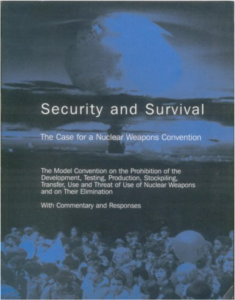
31. IPPNW, IALANA, INESAP. Security and survival: The case for a nuclear weapons convention. Cambridge, MA: IPPNW. 1999. [Return to text]
32. Gray P (ed). Facing reality: Nuclear weapons “cleanup”--prospect without precedent. Santa Barbara, CA: Project for Participatory Democracy. 1995. [Return to text]
33. Department of Energy. Historical records declassification guide CG-HR-1. Chapter 3, Transportation safeguards systems. Washington, DC: DOE. [Return to text]
34. Department of Energy. National security information (NSI) executive order 12958, section 3.4(b)(2). Washington, DC: DOE. [Return to text]
35. Transportation Safeguards Division. TSD News. Albuquerque, NM. March 6, 1998. [Return to text]
36. Defense Nuclear Facilities Safety Board. Report to Congress on the role of the defense nuclear facilities safety board regarding regulation of DOE’s defense nuclear facilities. Washington, DC. November 1998. [Return to text]


Key Research Questions for Safe Nuclear Disarmament

Institutional Concerns

  1. Who are the appropriate people to conduct the necessary research; what credentials and training do they require; what affiliations should they have (or not have)?
  2. How should independence be maintained and conflicts of interest be prevented?
  3. What information already exists and who controls it? What information needs to be acquired through new research? Can access to all necessary information be ensured?
  4. Can this body acquire and maintain trust among DOE employees and be assured of cooperation by current DOE contractors?
  5. What specific knowledge would this body seek and from whom, and who should act on that knowledge once it is gathered?

The Research Agenda

  1. What are the exposure risks of dismantling, handling, transporting, and securely storing nuclear weapons and their components? Which tasks require human contact?
  2. What kinds of facilities are needed? Should new facilities be built or can existing DOE (or other) facilities be converted? Who should staff them?
  3. In what form and by what means should nuclear materials be transported? What vehicles and what routes would minimize risks?
  4. What material, in what form, is to be stored? Which materials are radioactive and which are toxic? Where, and for how long, should materials be stored, and in what form? How should radioactive and toxic materials be protected against diversion in a way that minimizes exposure risks?
  5. What health protocols are appropriate for different tasks? What means might be employed to prevent exposure to radioactive or toxic materials? How frequently should workers be examined for potential exposure-related health problems? How should emergencies best be handled?
  6. Will nuclear disarmament activities pose exposure risks to the public? What risks? How can they be kept to a minimum?
  7. What is the appropriate balance between secrecy (to prevent diversion of nuclear materials) and openness (to provide workers and nearby communities with sufficient information about potential dangers)?
  8. How do health, environment, and safety considerations change in a security context that does not depend on nuclear deterrence or require the production of nuclear weapons?
  9. What measures are needed to ensure that concerns about safe nuclear disarmament are not used as an argument for resisting disarmament?

* MD is Program Director, International Physicians for the Prevention of Nuclear War and co-author of Security and Survival: The Case for a Nuclear Weapons Convention.

Address correspondence to Merav Datan, IPPNW, 727 Massachusetts Ave., Cambridge, MA 02139 USA; e-mail: mdatan@ippnw.org.

© Copyright 1999 Medicine & Global Survival


Would you like to comment on this article?

Please use this form to submit brief comments to the editors of M&GS. Or send a longer commentary by e-mail. Comments will be considered for publication only if they are signed by the author and an e-mail address is provided for validation purposes.

Your Name:

Your e-mail address:

Your thoughts about this article
(Please insert cursor after article title):


Return to M&GS homepage

Return to IPPNW homepage