
About IPPNWNewsEventsProgramsPublications and ResourcesAffiliatesSupport IPPNWContactSearchFAQHome
In This Section

Nuclear Abolition and ICAN

Small Arms and Aiming for Prevention

The Small Arms Threat

Affiliate Initiatives

International Initiatives

News

Publications

Links

Campaign Materials

Peace Through Health

Programs (main page)

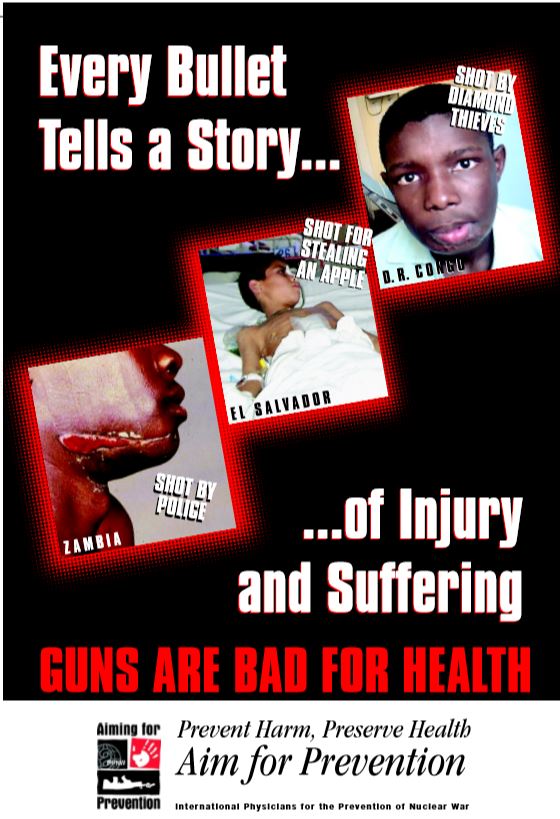
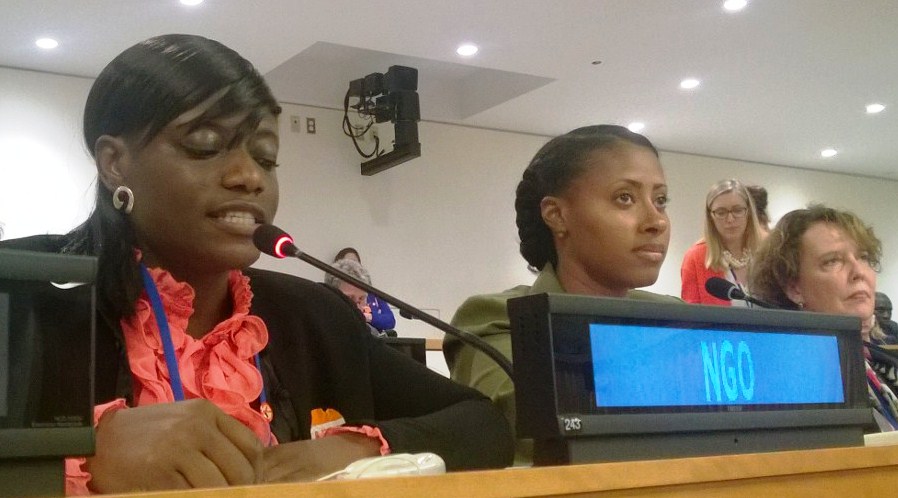
Aiming For Prevention logoStatement by Cathey Falvo, MD, MPH

International Physicians for the Prevention of Nuclear War (IPPNW)
and Physicians for Social Responsibility (PSR)

Preparatory Committee for the United Nations Conference on the Illicit Trade in Small Arms and Light Weapons in All Its Aspects, 2nd Session

18 January, 2001

Mr. Chairman, Your Excellencies,

I am speaking on behalf of International Physicians for the Prevention of Nuclear War, a federation of national doctor's groups in over 60 countries from the global North and South, East and West, and my own national affiliate Physicians for Social Responsibility in the United States, all of whom together received the 1985 Nobel Peace Prize. Our more than 100,000 members now work to prevent the unacceptable medical consequences of all war, including the several dozen currently being fought primarily with small arms and light weapons.

Illicit trade in small arms contributes to a worldwide epidemic that is fundamentally preventable. Consider that approximately 500,000 people die every year from wounds caused by small arms used in conflict, crime and other forms of violence.[1] Even in conflict situations, civilian casualties including women and children are estimated at 35 to 80 percent.[2] In some countries, such as Brazil, the rate of injury is ten times higher than the rate of mortality, not including even greater numbers of psychologically affected.[3]

But these are only the direct effects. In addition, outbreaks of disease are associated with conflicts fueled by small arms, with recent research in African war zones by the World Health Organization and Oxfam-UK finding increases in malaria, tuberculosis, AIDS, bubonic plague, and other ailments.[4], [5] Health infrastructure and delivery of services are disrupted and over-stretched, including depletion of blood supply in countries such as Burundi.[6] Economic costs in terms of treatment and lost productivity are extremely high. Enjoyment of human rights and long term development are sacrificed under the rule of the gun.

Existing public health research suggests a correlation between small arms availability and the incidence of gun-related deaths and violations of International Humanitarian Law. Research by the International Committee of the Red Cross comparing conflict and post-conflict periods in Afghanistan shows that injuries from firearms, fragmenting munitions, and mines decreased only by 20 to 40 percent after the cessation of conflict.[7] A 1999 study in South Africa shows firearms to be the leading cause of fatal accidental injuries for males ages 16 to 64.[8]

To a doctor, a firearms injury is a preventable injury whether caused in combat or in peacetime, on purpose or by accident. And an injury is an injury regardless of whether the bullet was fired from a gun acquired through illicit or licit means ­ whether through private security forces, retail stores, theft, or domestic or international smuggling.

Considering the evidence, our urgent recommendation is to define, implement, and strengthen mechanisms to eliminate illicit arms trade and make any licit transfers subject to responsible law. The crucial next steps towards a remedy have been identified and include: enforcement of embargoes, national legislation, investigation and prosecution of violations, and clear international norms based on humanitarian and human rights law, codes of conduct, and applicable national environmental and health standards. Domestic controls must also build on and contribute to these norms.

The International Programme of Action should emphasize the importance of public health. In addition to a preambular recognition of the role of the health sector, the plan of action could include the collection and analysis of health data, and use of health-based studies to shape policy.

Medical research is essential for understanding the complex nature of the small arms epidemic. Public health expertise can provide guidance for policy interventions and follow-up evaluation of their success. These themes will be explored in-depth when IPPNW convenes a conference entitled "Aiming for Prevention: International Medical Conference on Small Arms, Gun Violence, and Injury" to be held in Helsinki, Finland, September 2001, with the support of the Government of Finland and other donor agencies. I hope you will join us.

Thank you.

References

1. Cukier, Wendy, Firearms/Small arms; Finding Common Ground, Canadian Foreign Policy, 6 (1) Fall, 1998.
2. International Committee of the Red Cross, Arms Availability and the Situation of Civilians in Armed Conflict, Geneva, ICRC 1999.
3. United Nations, International Study on Firearms Regulation, Vienna, 1997.
4. World Health Organization, Press Release WHO/46, 30 June 2000, Geneva.
5. Oxfam, Under Fire: the humanitarian impact of small arms in north east Democratic Republic of the Congo, Executive Summary, Oxford, 2001.
6. From an address by Lt. Col. (Retired) Jan Kamenju, Security Research Information Centre, Kenya, at the United Nations, New York, 16 January 2001.
7. International Committee of the Red Cross, Arms Availability and the Situation of Civilians in Armed Conflict.
8. From an address by Dr. Etienne Krug, World Health Organization, at the United Nations, New York, 10 January 2001.


NGOs Urge Governments to "Cast a Wide Net" in Controlling Small Arms

Report on IPPNW participation at the Preparatory Committee, 2nd Session, UN Conference on the Illicit Trade in Small Arms and Light Weapons in All Its Aspects, 8-19 January, 2001 at the UN in New York.